Major Blood Vessel Chart : Solved A Describe The Different Types Of Blood Vessels B Chegg Com : Create a flow chart showing the major systemic veins through which blood travels from the feet to the right atrium of the heart
Major Blood Vessel Chart : Solved A Describe The Different Types Of Blood Vessels B Chegg Com : Create a flow chart showing the major systemic veins through which blood travels from the feet to the right atrium of the heart. The major arteries in the body. Create a flow chart showing the major systemic veins through which blood travels from the feet to the right atrium of the heart Use key choices to identify the blood vessel tunic described. Figures 1 and 2 show the major arteries and veins of the body. Heart diagram blood flow diagram & chart of the 4 chambers & the.
The systemic circulation is a major portion of the circulatory system. If you were to lay out all the blood vessels of the body in a line, they would stretch for nearly 60,000 miles. In the forearm, it travels deep under muscle until it comes closer to the skin surface near the wrist. Create a flow chart showing the major systemic arteries through which blood travels from the aorta and its major branches, to the most significant arteries feeding into the right and left upper and lower limbs; The three major types of blood vessels:
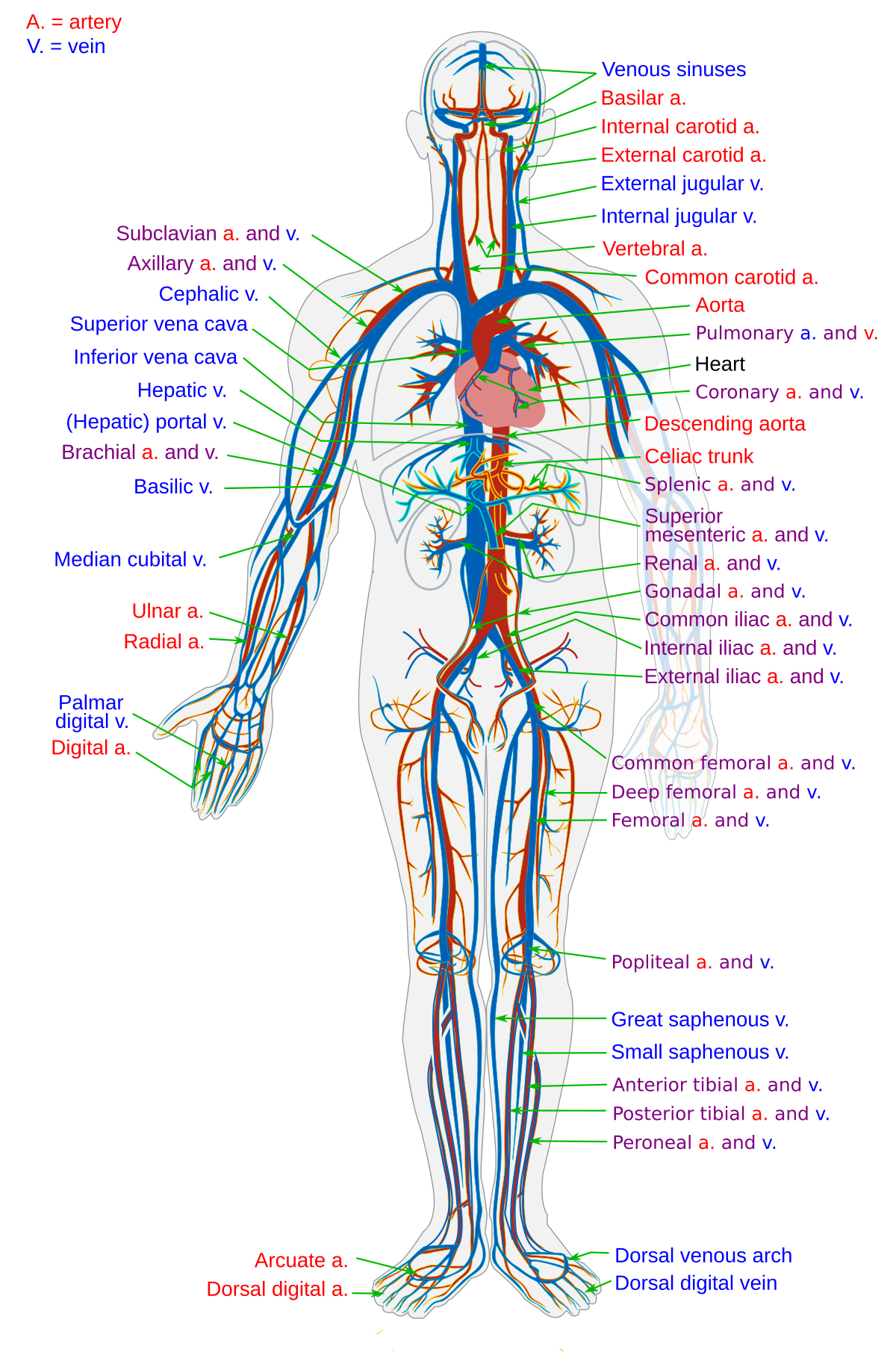
Create a flow chart showing the major systemic veins through which blood travels from the feet to the right atrium of the heart
Venules are defined as the vessels which empty into small veins. The radial artery comes from the brachial artery and travels across the front of the elbow. Table 14.1 major blood vessels pg. Blood is circulated through the body by blood vessels via the cardiovascular system which is comprised of the heart and the circulatory system.arteries move blood from the heart first to smaller arterioles, then capillaries or sinusoids, venules, veins, and back to the heart. The iliac, femoral, popliteal and tibial (calf) veins are the deep veins in the legs. Veins (in blue) are the blood vessels that return blood to the heart. Small veins are defined here as vessels which empty into the major vein. Blood vessels function to transport blood.in general, arteries and arterioles transport oxygenated blood from the lungs to the body and its organs, and veins and venules transport deoxygenated blood from the body to the lungs.blood vessels also circulate blood throughout the circulatory system oxygen (bound to hemoglobin in red blood cells) is the most critical nutrient carried by the blood. If you were to lay out all the blood vessels of the body in a line, they would stretch for nearly 60,000 miles. Arteries transport blood away from the heart. Figures 1 and 2 show the major arteries and veins of the body. A web of blood vessels—arteries, veins, and capillaries—circulate blood to organs. Arteries (in red) are the blood vessels that deliver blood to the body.
Deep veins, located in the center of the leg near the leg bones, are enclosed by muscle. Small veins are defined here as vessels which empty into the major vein. Figures 1 and 2 show the major arteries and veins of the body. The walls of the arteries are tightly and closely bound to the. 175 body part artery vein heart aorta vena cava head carotid jugular vein arms subclavian artery subclavian vein kidney renal artery renal vein legs iliac artery iliac vein intestines mesenteric arteries hepatic vein pulmonary circuit right ventricle æ pulmonary artery æ lungs æ pulmonary veinæ left atrium.

The catheter is then threaded through the major blood vessels and into the chambers of the heart.
Create a flow chart showing the major systemic veins through which blood travels from the feet to the right atrium of the heart The coronary arteries wrap around the outside of the heart. Veins are blood vessels that bring blood back to the heart. Once blood is oxygenated in the lungs, it returns to the heart and is then pumped throughout the body. The major arteries in the body. Major blood vessel chart : Veins (in blue) are the blood vessels that return blood to the heart. At the lower border of the popliteus, the popliteal artery terminates by dividing into the anterior tibial artery and the tibioperoneal trunk. Its smooth surface decreases resistance to blood flow Bulky middle tunic contains smooth muscle and elastin 3. A web of blood vessels—arteries, veins, and capillaries—circulate blood to organs. The systemic circulation is a major portion of the circulatory system. Create a flow chart showing the major systemic arteries through which blood travels from the aorta and its major branches, to the most significant arteries feeding into the right and left upper and lower limbs;
That's enough to circle the earth almost three times! Create a flow chart showing the major systemic arteries through which blood travels from the aorta and its major branches, to the most significant arteries feeding into the right and left upper and lower limbs create a flow chart showing the major systemic veins through which blood travels from the feet to the right atrium of the heart Create a flow chart showing the major systemic veins through which blood travels from the feet to the right atrium of the heart The major (or great) blood vessels of the heart are the larger arteres and veins that attach to the atria and ventricles and transport blood to and from the systemic circulatory system and the pulmonary circulatory system. The coronary arteries wrap around the outside of the heart.

The left counterparts to these vessels are direct.
Heart diagram blood flow diagram & chart of the 4 chambers & the. Create a flow chart showing the major systemic arteries through which blood travels from the aorta and its major branches, to the most significant arteries feeding into the right and left upper and lower limbs; Eventually, the smallest arteries, vessels called arterioles, further branch into tiny capillaries, where nutrients and wastes are exchanged, and then combine with other vessels that exit capillaries to form venules, small blood vessels that carry blood to a vein, a larger blood vessel that returns blood to the heart. Arteries transport blood away from the heart. Eventually, the smallest arteries, vessels called arterioles, further branch into tiny capillaries, where nutrients and wastes are exchanged, and then combine with other vessels that exit capillaries to form venules, small blood vessels that carry blood to a vein, a larger blood vessel that returns blood to the heart. Blood vessels function to transport blood.in general, arteries and arterioles transport oxygenated blood from the lungs to the body and its organs, and veins and venules transport deoxygenated blood from the body to the lungs.blood vessels also circulate blood throughout the circulatory system oxygen (bound to hemoglobin in red blood cells) is the most critical nutrient carried by the blood. Coronary arteries supply blood to the heart muscle. The radial artery is one of two major blood vessels that supply blood to the forearm and hand. Their origin was found to be in general parallel to an arterial arcade, except that in the ease of venous vessels the two paths of blood flow diverge rather than converge. The major veins drain blood from the same organs and limbs that the major arteries supply. Once blood is oxygenated in the lungs, it returns to the heart and is then pumped throughout the body. The three major types of blood vessels: Although there is a dual supply to the brain, each division shares a common origin.


Komentar
Posting Komentar